
Latex mattresses
BedBoy earns a commission on outbound retailer links. Editorial scoring is independent of commission rates. How this works →
Last updated:
Latex gets sold to you on how cool and breathable it is. That's the claim I'd discount first, because what justifies the price is recovery. Press the surface and it comes straight back, then it'll keep doing that for years after a cheaper polyurethane foam has gone soft in the one spot you lie in.
It starts as sap, tapped from a rubber tree, then foamed into a slab. Getting enough isn't quick, which is most of what you're paying for: each cut yields a trickle and the tree rests before the next. Rubber trees don't look like much, incidentally. Rows of grey trunks with a cup on each.
Density means weight, so latex is one of the heavier things you'll ever put on a bed frame. At 150 by 200 cm a king in solid latex is a two-person carry up your staircase. Work out who's turning it before your order goes in, not after the van's gone.
Two processes make it, though they don't hand you the same slab. Dunlop dates to 1929. Liquid latex is whipped to a froth, poured into the mould in one pass and cured, so heavier particles settle as it bakes, leaving the block denser at the bottom. Support duty, in other words.
Talalay arrived in the 1940s with two extra stages: the mould gets part filled, the latex expanded under vacuum to reach the edges, then flash frozen with carbon dioxide. Out comes a lighter block with an even cell structure through the depth, which is why you'll find Talalay in a comfort layer.
Given the choice I'd want Dunlop under you and Talalay above it, ahead of a single slab of either. No controlled trial has compared the two for a sleep outcome, so treat the difference as construction and feel. Anyone selling Talalay as the healthier of the two is selling a manufacturing step.
Firmness is where the evidence sits, and it's completely indifferent to what your mattress is filled with: researchers pooled 24 controlled trials in a systematic review before coming down on medium-firm or self-adjusted surfaces for sleep quality and spinal alignment.1 You can buy latex right across that band, so the material was never what got tested.
Now the cooling. Open cells and the pincore holes moulded through the slab do move air, so latex breathes better than closed-cell memory foam of the same depth. Density cuts the other way. Denser blocks hold more warmth, while density is also what stops the slab denting, so the two properties you're paying for are working against each other.
If your bedroom runs cold, that airflow is a cost rather than a feature. Cold sleepers are the one group who should turn this category down precisely because the thing it's sold on works. I wouldn't pay the premium for it. Pile a deep comfort layer over the core and you'll buy some warmth back, at which point you're paying for a property you've had to cancel out.
There's one more question to ask about airflow before you pay for it. I'd ignore it wherever it's made for a comfort layer two or three centimetres deep, since most bodies compress straight through something that thin. Pincore holes sit in the core, so what reaches them decides whether they do anything for you.
A BedBoy Score sits on every card here, and cutting the list down is all it's for. After that, ask the retailer how deep the latex layer runs in centimetres, and whether what's beneath it is foam or a spring unit.
37 products compared from live retailer data. Scored under our published rubric; curated by Gary Ferguson. Corrections via our corrections policy.
Browse categories
Browse all brands
- Bodyshape
- Dunlopillo
- Emma Mattress
- Ergomotion
- Eve
- Flaxby
- Furniture Village
- Harrison Spinks
- Horizon
- House Beautiful
- Hyde & Sleep
- Hyde and Sleep
- Hypnos
- iGel
- Jay-Be
- Julian Bowen
- Little Big Dreams
- Luna
- Millbrook Beds
- Relyon
- Rest Assured
- Romantica
- Sealy
- Silentnight
- Simba
- Simply Bensons
- Sleepeezee
- Sleepmasters
- Sleepmotion
- SleepSoul
- SleepyTime
- Slumberland
- Snooze
- Sophie Conran
- Staples & Co
- Tempur
- The Dream Team
- The Dreams Workshop
- TheraPur
- Welcome
- WIEMANN
- X Rocker
- healthopaedic
- birlea
- hypnos
- sareer
- orignal-bedstead-company
- nora
- intex
- symple-stuff
- visco-therapy
- house-additions
- home-loft-concept
- clima-control
- kally-sleep
- viva
- healthbeds
- clima-comfort-latex
- feather-and-black
- sleep-science
- spink-and-edgar
- hypnia
- dreamcloud
- revived
- airsprung-beds
- bestway
- disney
- h-living
- bodyshape
- bed-butler
- sprungland
- stompa
- protect-a-bed
Did you know?
Putting your phone down an hour before bed helps you fall asleep faster and wake up less.
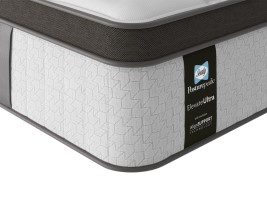
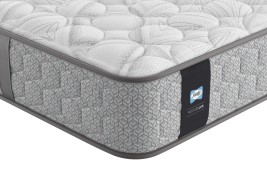
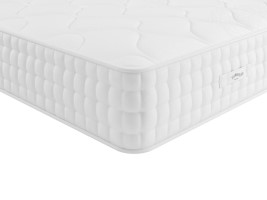
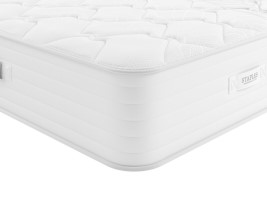
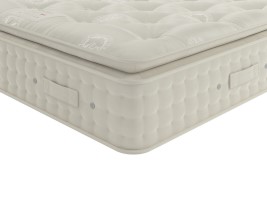
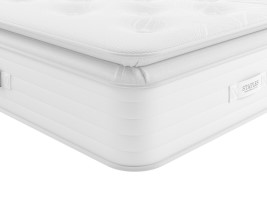
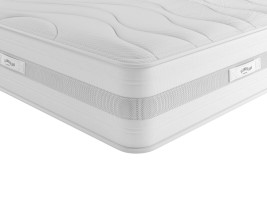
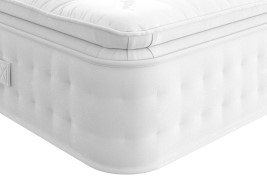
Does a natural latex label mean it's all latex?
No, and rarely close to it. Blended latex, natural sap mixed with styrene-butadiene rubber, gets sold as latex right across UK retail, and you'll rarely see the ratio on your ticket. Even a block sold as 100% natural carries curing agents, because raw sap won't foam until it's vulcanised.
Certification is the only check you've got, and OEKO-TEX STANDARD 100 tests the finished article against a list of harmful substances rather than certifying how much latex is inside it.2 GOLS covers organic latex content and you'll see it far less often on a UK listing. Where neither appears, ask for the percentage in writing before you pay for the word natural, on the eco and natural shelf as much as anywhere.
The allergy that isn't on any label
One group shouldn't buy this category at all. Natural rubber latex is tapped from Hevea brasiliensis, and it's the proteins in it that cause dermatitis and asthma in some people, with anaphylaxis possible in serious cases. HSE puts potential sensitisation at 1 to 6 per cent of the general population, while noting that not everyone sensitised develops symptoms.3 It isn't a warning that mattress listings carry.
Your screening question's about food. React to banana, avocado, kiwi or chestnut and that cross-reacts with latex, as does trouble with gloves, balloons or condoms. Makers point at the wash stage in production, though the limits that do exist were written for medical gloves, not for anything you sleep on. If any of that describes you, speak to your GP before you buy anything.
Do latex mattresses do anything about dust mites?
Less than you'd think from the marketing. Mites do badly in latex, which is a property of the material and not a drop in anybody's symptoms. Nothing published shows that what's inside a mattress changes an allergy or an asthma outcome.
Latex is the odd one out, because it's carrying an allergy of its own. The filling sold hardest to allergy sufferers is the same one HSE writes an allergy page about, and no ticket you'll pick up prints both halves. What randomised evidence exists for bedding sits with mite-impermeable encasings, tested in children already sensitised to mites. An encasing is a cover, not a core.
Tension, and the position it has to match
Tension is the trade word for firmness, and retailer feeds still print it, so read the two as one. Side sleepers want the softer end, because the shoulder and the hip travel furthest into a mattress. Back sleepers want the lumbar curve filled without the pelvis dropping below the ribs, which puts you at medium-firm. Front sleepers want firm, then a step past it.
Turn over a lot in the night, which is most of us, and medium is where you start looking. Combination sleepers are better served by latex than by anything else, because it lets go the instant your weight moves off it. Which is the one claim about sleeping position here with a mechanism behind it instead of a study.
One number does travel between brands. The European H(s) scale runs 1.0 at the firmest to 10.0 at the softest, and it's the only firmness figure meaning the same thing at two different makers. You'll almost never see it printed, so ask.
Where the ten-year claims come from
Trade estimate, mostly. There's no trial, no standard and no published dataset behind any mattress lifespan figure, so a retailer quoting one at you isn't doing much more than quoting another retailer. The ten-year figure that keeps turning up is convention passed from listing to listing, a rule of thumb rather than anything anybody has measured.
Vulcanised rubber makes the better case, because it's elastic by nature and shrugs off the settling that ages cheap polyurethane. It'll stay elastic for as long as the block is whole. Where a specification here doesn't match the retailer's, the corrections page carries the fix.
Why does latex cost more than foam?
Because the raw material is farmed rather than mixed. Both routes need moulds, a curing oven and a wash stage, with Talalay adding vacuum and freezing plant. Polyurethane comes out of a chemical plant in a continuous bun that's sliced to size.
All of that reaches the shelf price, which is why a hybrid with a thin latex layer over a pocket unit sits so far below an all-latex build. On a fixed budget it's the sensible compromise, not a lesser copy, so you'll find the under £1,000 shortlist full of them.
Is latex just a springier memory foam?
They're opposites, mechanically. Memory foam softens as it warms and keeps the shape you left in it, so turning over takes a shove. Latex answers pressure instead of heat and releases as soon as you move, which is easier work at three in the morning.
Where that shows up is in how each one relieves pressure. Foam does it by conforming, so it wraps whatever's sitting on it, while latex does it by deflecting and pushes back the whole time. At the same firmness label latex gives your shoulder less room, so side sleepers want a softer grade of it than they'd take in foam.
Weight, stairs and doorways
This is the category most likely to defeat you on a staircase. Compared with the spring unit or the foam block it replaces, a latex core is simply heavier, so even a double needs two people and a super king is genuinely awkward. Measure the turn at the top of your stairs and the width of your bedroom door before you order.
Getting it up there is only the first time you'll move it. Handling a latex slab alone is a bad idea above a double, so whatever maintenance it asks for wants two people. Nobody enjoys finding that out on the day.
Can you get latex without buying a whole latex mattress?
Yes, and on most budgets it's the version to look at. You'll find it as a comfort layer over a pocket unit, as a top layer paired with memory foam, and inside pillow-top builds. It's how the material reaches prices an all-latex slab can't.
What you're buying then is the depth. Two centimetres of latex over a polyurethane base will age like the base, which is most of what's under you. So the layer figure decides whether the word on the ticket is worth anything to you, and retailers rarely publish it.
Wrong material for these sleepers
Skip this category outright if you've a known or suspected natural rubber latex allergy. That's a GP question, not a shopping one. Give it a miss too if your bedroom runs cold, because the airflow it's sold on is working against you.
Under about £500 your money goes further in a pocket unit than in a thin latex veneer over one. And if you'll be moving the bed on your own, this is the heaviest thing on the mattress list to pick up.
Common questions
Where do these rankings come from, if nobody has slept on them?
From two places, and neither is a bedroom. Whatever the maker's published about the build is one, and owner review text is the other. Reviews get read across whichever retailers list the same product, so a bed sold in four places contributes four pools instead of one. BedBoy has never run a testing programme, and there's no badge here that implies one. The limit bites harder in this category than in most, since Dunlop and Talalay differ in a way you'd notice in ten seconds and nobody's ever compared them. How the score's built is written out on the scoring page.
Can you sleep on latex if you have a latex allergy?
That's a question for your GP, and no product page is in a position to answer it. Proteins in the natural rubber itself are what you'd be reacting to, so anything sold as 100% natural is the likeliest to carry them, though a blend isn't automatically safer. No consumer-mattress standard sets a residual protein limit, whatever a maker tells you about washing. If you've reacted to gloves, balloons or condoms, or to any of the four foods above, get advice before you spend anything.
Is Dunlopillo the same as Dunlop latex?
They're not the same thing. Dunlop is a process and Dunlopillo is a brand that grew out of it, so a mattress can use the Dunlop process without carrying the badge. Nor is a Dunlopillo product automatically pure Dunlop latex. Geltex sets the same trap, being Sealy's trademark and not a category. Price follows the process rather than the name, which is why an all-Talalay slab costs you the most. Much of that goes on a core whose only job is to be firm. Read the specification line on a listing, and don't let the name settle it.
How heavy is a latex mattress?
Heavier than the foam or the springs it replaces, at every size in the ladder. Mass per litre runs higher than polyurethane, and the figure scales with the slab. Step up from a double at 135 by 190 cm to a super king at 180 by 200 cm and it'll cost you far more in weight than money. Euro sizes add length rather than bulk. A Euro single at 90 by 200 cm runs 10 cm longer than the standard 3ft single, which is worth checking if your feet already hang off the end. Measure your frame's internal dimensions before you order, because a slab 2 cm oversize won't drop in.
Does latex sleep cooler than memory foam?
Cooler than closed-cell foam of the same depth, yes. Open cells and the moulded pincore holes let air travel where solid foam blocks it. Against every other filling, no, and nothing published shows a latex mattress sleeping cooler than another material. Read a cooling claim next to the density figure, since the two move in opposite directions and your listing will only ever show one.
References
- 1. A Radwan and others, ‘Effect of different mattress designs on promoting sleep quality, pain reduction, and spinal alignment in adults with or without back pain; systematic review of controlled trials’, Sleep Health, vol. 1, no. 4 (2015), pp. 257–267, doi:10.1016/j.sleh.2015.08.001.
- 2. OEKO-TEX, ‘OEKO-TEX STANDARD 100’, oeko-tex.com (2026) <https://www.oeko-tex.com/en/our-standards/oeko-tex-standard-100> [accessed 9 August 2026].
- 3. Health and Safety Executive, ‘Latex allergies’, hse.gov.uk (2026) <https://www.hse.gov.uk/skin/employ/latex.htm> [accessed 9 August 2026].