
Ottoman beds
BedBoy earns a commission on outbound retailer links. Editorial scoring is independent of commission rates. How this works →
Last updated:
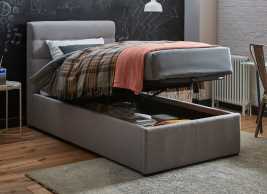
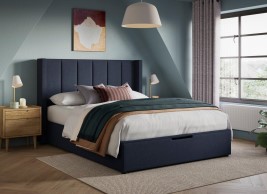
An ottoman bed's a box with a bed on the lid. Gas struts carry most of the weight of the mattress and the platform as the whole lot hinges upward, which leaves you the full footprint of the frame, so a double opens onto 135 x 190 cm (4 ft 6 in by 6 ft 3 in) of floor rather than the slice a drawer divan reaches.
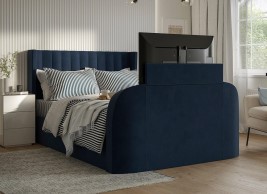
Side lift or end lift is the decision you can't undo after delivery, so take it first. Push the foot of the bed against a wall and side lift is the only one that works. End lift needs clear floor at the foot, though it'll give you the straighter reach down into the space.
Either way, that side needs clearance for the lid to swing through. Put a wardrobe on the same wall and you'll meet the problem the first time you try it.
I can't tell you whether the lift will feel easy, and neither can anyone selling you one. A strut pushes back with the force it was built for and nothing more, so the weight left over is the same whoever's lifting it. What changes is whether you can manage that share, half asleep, with one hand holding your duvet clear. It's lighter buyers this catches, because a strut sized for the mattress takes no account of who's under it.
If I could force one figure onto every ottoman listing it'd be the strut rating in newtons, ahead of everything else printed on there. Nobody publishes one at category level, so it hides in per-product sheets when it turns up at all.
So work the problem from the other end. Mattress weight in kilograms is on the maker's spec sheet. Weigh that against whatever the frame's paperwork says, because a deep pocket-sprung mattress is the heaviest thing your platform will ever hold.
That deck under the mattress does more than the fabric over the sides. Solid platform, sprung slats or a slatted lid, and I'd take the solid platform every time under foam. Foam mattress warranties usually set a maximum slat gap in their terms, so a wide-slatted lid can void the mattress before your bed's done anything wrong. Upholstered sides wear at the lift edge where your hands go, while faux leather wipes clean and marks as it ages.
Under the lid you've got a sealed textile store with no airflow path through it. That's reasoning from the construction rather than a measurement, because nobody's instrumented the inside of one.
What's been measured is the room around it, where a bedroom experiment varying ventilation found better sleep quality and better next-day performance on the better-ventilated nights.2
Air the base out when you strip the bed.
Drawers win if you need what's under there every day. An ottoman makes you move the pillows, then the duvet, then your own weight off the mattress, which is why it suits seasonal bulk and fights you over daily items.
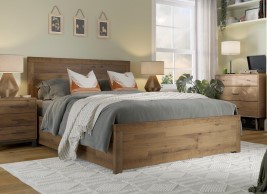
Where your storage boxes already live on castors under the bed, an ottoman takes that clearance away for good. Wooden frames on legs keep it. So does a blanket box at the foot, which you open without touching the bedding.
Every frame below carries a BedBoy Score. It's useful for cutting a long list down and no help at all once you're down to three. After that it's your lift side, the mattress weight, and whether anyone will still sell you a spare pair of struts years from now.
69 products compared from live retailer data. Scored under our published rubric; curated by Gary Ferguson. Corrections via our corrections policy.
Browse categories
Browse all brands
- Bodyshape
- Dunlopillo
- Emma Mattress
- Ergomotion
- Eve
- Flaxby
- Furniture Village
- Harrison Spinks
- Horizon
- House Beautiful
- Hyde & Sleep
- Hyde and Sleep
- Hypnos
- iGel
- Jay-Be
- Julian Bowen
- Little Big Dreams
- Luna
- Millbrook Beds
- Relyon
- Rest Assured
- Romantica
- Sealy
- Silentnight
- Simba
- Simply Bensons
- Sleepeezee
- Sleepmasters
- Sleepmotion
- SleepSoul
- SleepyTime
- Slumberland
- Snooze
- Sophie Conran
- Staples & Co
- Tempur
- The Dream Team
- The Dreams Workshop
- TheraPur
- Welcome
- WIEMANN
- X Rocker
- healthopaedic
- birlea
- hypnos
- sareer
- orignal-bedstead-company
- nora
- intex
- symple-stuff
- visco-therapy
- house-additions
- home-loft-concept
- clima-control
- kally-sleep
- viva
- healthbeds
- clima-comfort-latex
- feather-and-black
- sleep-science
- spink-and-edgar
- hypnia
- dreamcloud
- revived
- airsprung-beds
- bestway
- disney
- h-living
- bodyshape
- bed-butler
- sprungland
- stompa
- protect-a-bed
Did you know?
Putting your phone down an hour before bed helps you fall asleep faster and wake up less.



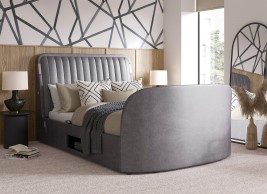
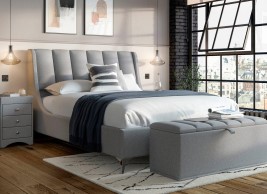




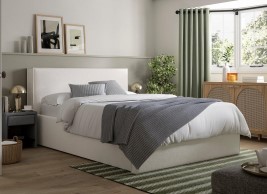
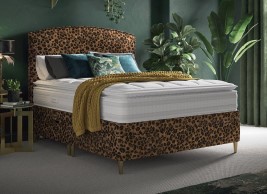
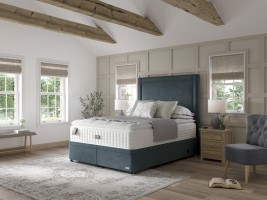
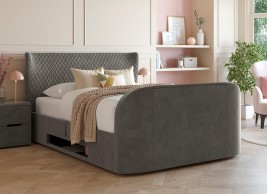
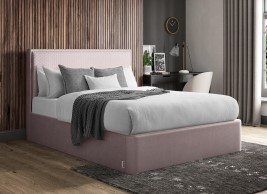

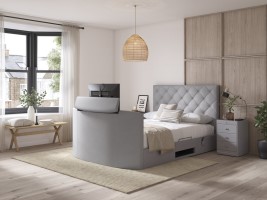
How much fits under there?
More than a drawer set. Less than the photographs suggest, because the space you get is the shape of the bed above it, so it grows with the size you buy and with nothing else.
Widths climb 2 ft 6 in, 3 ft, 4 ft, 4 ft 6 in, 5 ft and 6 ft as you go from small single to super king. In centimetres that's 75, 90, 120, 135, 150 and 180 across, on a 190 cm length up to double and 200 cm for the two biggest.
Ottoman's also a word for a footstool, which tells you nothing whatever about buying one.
Depth is the figure nobody standardises
Depth's the part that moves. Usable depth is what's left once the deck, the side panels and the strut mounts have each taken their share, which is why it never matches the outside height of the box. Two frames that measure the same across the room can hold quite different volumes. Take your depth figure from the listing in front of you rather than from a category page, this one included.
Can one person open it on their own?
Not always. There's no published load rating for gas struts as a class, no standard lift force, and no figure a retailer has to print. Your listing won't tell you which way it'll go.
What's left is arithmetic you can do yourself. One side of that sum is fixed and the other isn't, so the difference is on your arms and your lower back. HSE guidance on manual handling is the right reading for that, written for awkward loads at work rather than for bedroom furniture.3
If you've had a back injury, or you're buying for a parent who lives alone, put the question to a physiotherapist or a doctor instead of a salesperson.
The struts are the part that fails
They weaken slowly rather than snapping, so your first sign is a lid that won't stay up on its own, usually noticed at the worst possible moment. Everything else is a wooden box that's had fabric stapled over it. That's the whole machine.
Nobody publishes a lifespan
No figure exists at category level, and I've never seen one quoted that stood up. Treat any lifespan you're told as sales talk. Nobody has to stand behind it. Replacements bolt on at each end, so the question to ask is whether the maker will still sell you a matched pair. A frame that can't be re-strutted has an expiry date nobody printed on it.
Fabric, faux leather or wood?
Whichever one you'll be honest about cleaning.
Upholstered sides take the wear at the lift edge, because that's where your hands go every time, and a pale weave shows it inside a couple of years.
Faux leather wipes down in seconds, then cracks along that same edge as it ages. Wooden and metal frames dodge both, though they give you the hardest surface in the room to bark a shin on. Velvet's the one to think twice about, since a pile that gets gripped and released twice a week wears differently to the rest of the panel.
Do ottoman beds get damp inside?
They can, though that's construction reasoning rather than anything measured. Sealed boxes have no airflow path, cold floors and outside walls draw condensation toward them, and textiles left for a season have nowhere to dry.
Household-level evidence is what's there instead. One large adult cohort found self-reported damp or mould at home going with the onset of insomnia symptoms, snoring and daytime sleepiness.1 Observational, self-reported, about homes rather than beds, so read it as a reason to keep your base dry and not as a finding about ottomans.
Where there's visible mould or structural damp in your room, the GOV.UK guidance is the place to start and a bed isn't the thing to fix.4
Will it get up your stairs?
A divan splits into two halves and an ottoman doesn't. Some arrive as one rigid box the size of the bed, so on a double that's 135 by 190 cm going round the turn on your staircase in one piece.
Flat-packed frames arrive as panels and solve that, though they put the assembly on you or on whoever you pay to do it. Two people either way. Measure the narrowest point on your route rather than the doorway, because it's the turn at the top of the stairs that stops deliveries.
Choosing the mattress that goes on it
Any of them, on a flat deck. That deck is solid, so your mattress isn't bridging anything and construction barely comes into it.
Weight does. Deep pocket units with natural fillings are about as heavy as a mattress gets, where a rolled foam mattress of the same size is usually a good deal lighter. If the lift looks marginal for whoever uses the bed, that's the part of the decision still open.
Your floorstanding headboard sits behind the frame rather than on it, so it'll stay put whichever way the lid goes.
Things to keep out of it
Damp things first, and anything you'll want at three in the morning. Spare duvets, winter bedding, suitcases and the box of things nobody can throw away are what the space is for, since none of it needs reaching twice a year.
Everything else is better off in a drawer. Get bedding properly dry before it goes in, because a warm sealed box is the last place a bit of residual damp will find its way out of. And the shoes can stay out, whatever the storage-maximising articles tell you.
What to ask before you order
Which side it lifts from, and whether that side is the one with floor clearance. The storage depth in centimetres, measured inside the box and not across the outside of it. Whether replacement struts are sold separately, and by whom.
Then weigh your mattress, or take the figure off the maker's sheet, because that's what the whole mechanism answers to. Get the strut answer in an email you can keep, since a shop floor conversation's worth nothing on the day the lid stops staying up. Spot a wrong number on a card here and it belongs on the corrections page.
Common questions
Can you replace the gas struts yourself?
Only if the maker still sells the matched pair, which is the first thing to check and the thing least likely to be printed anywhere. The job itself is small: they bolt on at each end, so a spanner and a second pair of hands is all you'll need. Sourcing's the catch. Struts are matched to the weight and geometry of one frame, so a generic pair rated too low won't hold the lid up and a pair rated too high will fight you closing it. Ask the retailer about the part before you buy the bed, not after the lid's dropped.
Side lift or end lift in a small bedroom?
Side lift, in most small rooms, since a small room usually means you've pushed the bed against a wall at the foot to free up floor. Check which side, though. The lid needs clear floor along the full length of whichever side it hinges from, so a side-lift frame against the wrong wall is worse than useless. Where both side walls are tight and the foot is clear, end lift wins, because it only asks for the depth of the mattress in front of the bed instead of its whole length.
Will a heavy mattress stop the base staying up?
It can. Struts are specified for a load range, so a mattress heavier than the frame was built around will let the platform creep back down or refuse to rise past halfway. No maker prints the crossover point, and no standard makes anyone work it out. Compare the mattress weight in kilograms against whatever your frame's paperwork says. Treat a very deep sprung mattress as the risky pairing when the paperwork says nothing. Struts also weaken with age, so a pairing that copes when the bed's new can stop coping later.
Can you get an ottoman with drawers as well?
Yes. Sold as a half ottoman or a side-drawer ottoman, depending on who wrote the listing. Makers shorten the lift section so drawers can run under the remaining length, which means you lose capacity overall in exchange for daily access to some of it. Drawer divans make the same trade from the other end. It fixes the one thing an ottoman can't. Opening the whole bed to fetch a phone charger is a job, not a movement. Check the drawer runs clear of the lift arc, because on some builds you have to shut the drawer before the lid will come down.
Has anyone at BedBoy lifted one of these?
Nobody has. Nothing on this page has been slept on, lifted or handled by anyone here, and no badge on the site says otherwise, because there has never been a testing programme to put behind one. Rankings are built from what makers publish and what buyers write afterwards, gathered from every shop selling the frame, with the weighting set out on the rubric. That limit bites harder in this category than in most, since lift effort is the thing buyers ask about first and it's the one thing a specification can't tell you. Everything above about the lift is reasoned from how the mechanism works, and it's labelled that way on purpose.
References
- 1. J Wang and others, ‘Dampness and mold at home and at work and onset of insomnia symptoms, snoring and excessive daytime sleepiness’, Environment International, vol. 139 (2020), pp. 105691, doi:10.1016/j.envint.2020.105691.
- 2. P Strøm-Tejsen and others, ‘The effects of bedroom air quality on sleep and next-day performance’, Indoor Air, vol. 26, no. 5 (2016), pp. 679–686, doi:10.1111/ina.12254.
- 3. Health and Safety Executive, ‘Manual handling at work’, hse.gov.uk <https://www.hse.gov.uk/msd/manual-handling/index.htm> [accessed 9 August 2026].
- 4. Ministry of Housing, Communities and Local Government, ‘Damp and mould: understanding and addressing the health risks for rented housing providers’, gov.uk (2023) <https://www.gov.uk/government/publications/damp-and-mould-understanding-and-addressing-the-health-risks-for-rented-housing-providers> [accessed 9 August 2026].