
Gel mattresses
BedBoy earns a commission on outbound retailer links. Editorial scoring is independent of commission rates. How this works →
Last updated:
Falling asleep is a heat problem before it's anything else. Your core temperature starts dropping about two hours before you drop off and keeps sliding into the small hours, which makes the bed underneath you one of the surfaces heat leaves through. Gel is the trade's answer to that: a sound mechanism, sold a good deal larger than it is.
The only evidence anyone has taken at mattress level is thermal, and gel isn't what it measured. Put a sleeper on a bed whose top two centimetres hold far more heat and the body sheds more by conduction, spending longer in deep sleep.1 That trial worked by changing how much heat the whole sleeping surface could hold. A gel additive mixed into a foam layer doesn't come near that.
No published trial has ever set gel-infused foam against plain memory foam and followed what happened to anyone's sleep. Not one, in either direction. That absence is the most useful fact about the category, and no listing carries it.
So my own reading of gel sits between the two camps you'll find online. It isn't marketing, though it isn't the fix people want it to be either. What it does is raise the conductivity of the foam it's in, which you feel on first contact, until the layer reaches your temperature and stays there. A delay, then, rather than a solution.
Cold isn't the target either, which is the part that catches buyers out. Raise skin temperature by 0.4 °C without touching core temperature and sleep deepens, with less waking through the night.2 What you want is a bed that lets your core shed heat while your skin stays comfortable. Something that feels chilly under your forearm tells you about the second of those and almost nothing about the first.
There's a constraint here that never reaches a label: cooling only works where the layer touches you, so if you sink through the comfort layer, the gel ends up above your skin rather than against it. Ten minutes in a showroom isn't long enough to find out whether that's you.
What annoys me about this category is that the ticket almost never says which kind of gel you're getting, or how much of it went in. Beads through a foam layer and a cool-to-touch finish on the cover behave nothing alike, though both go on sale under the same word. You're being asked to pay a premium you can't price.
Overheating isn't my beat, which is why the hot sleeper shortlist is written by somebody it happens to, so I've nothing to defend here either. The BedBoy Score beside each card is built from what makers publish and what owners wrote, and neither has ever included a thermal figure.
Somewhere along the way the trade decided that cold looks like sleep. Nobody has ever explained that one to me.
29 products compared from live retailer data. Scored under our published rubric; curated by Monika Sharma. Corrections via our corrections policy.
Browse categories
Browse all brands
- Bodyshape
- Dunlopillo
- Emma Mattress
- Ergomotion
- Eve
- Flaxby
- Furniture Village
- Harrison Spinks
- Horizon
- House Beautiful
- Hyde & Sleep
- Hyde and Sleep
- Hypnos
- iGel
- Jay-Be
- Julian Bowen
- Little Big Dreams
- Luna
- Millbrook Beds
- Relyon
- Rest Assured
- Romantica
- Sealy
- Silentnight
- Simba
- Simply Bensons
- Sleepeezee
- Sleepmasters
- Sleepmotion
- SleepSoul
- SleepyTime
- Slumberland
- Snooze
- Sophie Conran
- Staples & Co
- Tempur
- The Dream Team
- The Dreams Workshop
- TheraPur
- Welcome
- WIEMANN
- X Rocker
- healthopaedic
- birlea
- hypnos
- sareer
- orignal-bedstead-company
- nora
- intex
- symple-stuff
- visco-therapy
- house-additions
- home-loft-concept
- clima-control
- kally-sleep
- viva
- healthbeds
- clima-comfort-latex
- feather-and-black
- sleep-science
- spink-and-edgar
- hypnia
- dreamcloud
- revived
- airsprung-beds
- bestway
- disney
- h-living
- bodyshape
- bed-butler
- sprungland
- stompa
- protect-a-bed
Did you know?
Putting your phone down an hour before bed helps you fall asleep faster and wake up less.
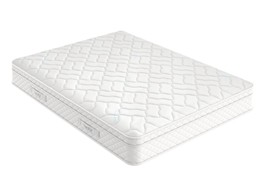
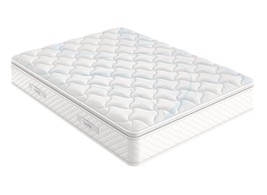
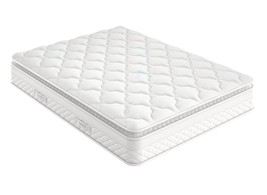
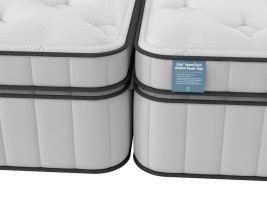
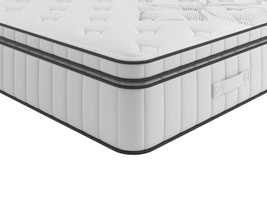
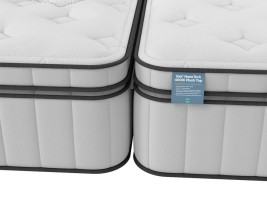
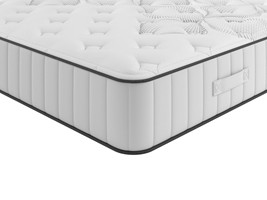
What the gel changes, and what it leaves alone
It's the same polymer either way: gel beads or gel particles get blended through viscoelastic foam, or a gel layer sits near the surface. The foam underneath carries on behaving as it always did.
What changes is how fast heat leaves the surface you're lying on, and how much that layer can take before it matches your temperature. How far you sink into it doesn't change at all. If the enveloped feeling of foam is the thing putting you off, gel won't get you round it.
Does the cooling last the whole night?
No. That layer warms to you and the difference goes with it, and going on the mechanism alone that's a question of hours rather than of a whole night.
Think of it as a delay. You get a cooler start, then the rest of the night runs on the room, the bedding and whatever air can move through the base underneath. That second half is the part this category never discusses, and it's the half worth planning for.
Which kind of gel is on the ticket
Words on a listing don't map neatly onto what's inside. Beads and particles blended through a foam layer spread the effect thin and even, while a gel layer sitting near the surface concentrates it where your skin is, so you feel more of it and you feel it sooner.
Then there's the cool-to-touch finish, which sits on the ticking rather than in the foam. Fit a quilted protector over one of those and you've put padding between yourself and the thing you paid extra for. Phase-change material is the one to ask about, because it absorbs latent heat as it changes state, so it holds a temperature instead of conducting and then giving up. Nobody has trialled it in a mattress.
Is a gel mattress cooler than a pocket-sprung hybrid?
That's not the choice in front of you. Gel is an additive rather than a build, so it turns up in the comfort layer of plenty of beds sold as a hybrid, and in all-foam ones as well.
What separates two of them is how much foam sits between your skin and the unit holding you up. Going on the mechanism, that decides more of how a bed feels than the additive ever will, so settle it before you ask about the gel.
The other four things heating you up
Gel is one of five variables setting how warm your night is, and it's the only one you can't revisit afterwards. The room comes first: The Sleep Charity puts an ideal UK bedroom at 16 to 18 °C.3
After that come your duvet tog, what your sheets are woven from, and whether any air can get under the mattress at all. Then there's the protector, which most people fit in the first week. A quilted one on a gel-surfaced bed covers over the layer they paid extra for.
Work through all of that, and if you're still waking up drenched, with a fever or unexplained weight loss alongside it, that's a GP conversation rather than a shopping one.
Why is soft gel so hard to find?
Because the ranges start at medium. Blend a solid additive through viscoelastic foam and you stiffen what it goes into, which is reason enough for a gel version to sit a notch above the plain foam it came from. Why the whole category settled up there isn't published anywhere I've been able to find.
Sleep on your side at the lighter end of the scale and this bites. Your shoulder has to drop before your neck lines up with your spine, which a medium surface won't let it do. Soft-medium is where I'd start, and I'd take the right firmness in plain foam over a cooler surface at the wrong one every time.
Two of you, twice the heat
Share the bed and the layer saturates faster, because two bodies put roughly twice as much heat into the same surface, which no additive changes.
So if you both run warm, spend on airflow and bedding rather than on an infusion. That's the part to settle before you read a couples shortlist and take cooling for the thing that solves sharing.
Does the cool feel wear off over the years?
Nobody publishes a figure for this, so what follows is reasoning from the mechanism rather than measurement. Its effect depends on the gel sitting against your skin, which means anything that gets between the two takes some of it away.
A comfort layer that's settled under your hip does exactly that. Same goes for a quilted protector, or for a topper laid over the top. None of that is the gel failing. It's the gel getting further away from you.
Is gel the same thing as cooling?
No, though the two share a ticket often enough that buyers treat them as one word. Gel names a property of a material: how fast heat leaves it, and how much it soaks up before it warms through. Cooling names how your night went.
Those are different claims and only the first has anything behind it, which isn't the same as saying gel does nothing. One review of 24 controlled trials on mattresses and sleep couldn't establish what surface temperature anybody should aim for.4 Read the material claim and leave the outcome claim where you found it.
What the extra money is buying
No listing will itemise it for you. One that says gel won't tell you which format, how deep the layer runs, or how much additive went in. So there's no working out what share of the price it accounts for.
Which makes gel a tiebreaker rather than a reason to buy. Get the firmness and the support right first, then let the gel choose between two beds you already like. If the budget is the thing that's fixed, the under £1,000 shortlist is a sensible place to work it out.
Who should skip gel
Anyone whose nights aren't warm ones. They get sold to hardest and gain least, since a premium for heat management is worth nothing against a problem that isn't there.
Skip it too if the gel bed in front of you sits a notch firmer than suits you. Plain foam at soft-medium will do more for a light side sleeper than a medium one with gel through it.
And if overheating is bad enough to be the reason you're shopping at all, one additive is too narrow an answer. The hot sleeper shortlist starts from the whole build instead.
Common questions
Are gel mattresses cooler than plain memory foam?
On contact, yes. Gel-infused foam conducts heat off the skin faster than untreated foam does, so the surface feels different for the first stretch of the night and it's easy enough to notice under a palm in a showroom. By morning that gap has closed, because the layer has reached body temperature and behaves like the foam around it. So judge one the way you'd judge any memory foam mattress, on firmness, on layer depth and on what sits underneath, then count the cool start as a small bonus.
Will a gel mattress stop me overheating?
Not on its own, and there's a trap specific to this one. An effect living near the surface is the easiest thing in a bed to cancel. Most people cancel it inside the first week, by fitting a quilted protector over the top. Take that off, get the room somewhere sensible, then see where it leaves you before spending on a material. If you're waking up drenched night after night, with a fever or weight loss alongside it, that's a question for your GP rather than for a mattress retailer.
What firmness do gel mattresses come in?
Medium and upwards, in the main. Soft gel exists but it's scarce, so a light side sleeper often has to choose between the firmness that suits them and the cooling layer they went in for. Take the firmness. If the surface won't let your shoulder drop, your neck stays out of line with your spine all night, and that's a problem you'll still feel long after you've stopped noticing the temperature. Start at soft-medium, then let gel decide between what's left. The side sleeper shortlist works the same way round.
Has anybody at BedBoy slept on these?
No. Nobody here has slept on a mattress, and no card on the site carries a tested badge. There has never been one, at any point. Positions are built from what makers publish and from the reviews left with every retailer that sells the model. How that's done is set out on the scoring page. Be careful what you take from an owner review in this category, though. Nobody writing one has any way of knowing the thermal capacity of the surface they slept on, because no maker publishes it.
Is a gel topper a cheaper way to try it?
Yes, and it's the cleanest test available. A topper puts the gel directly against your skin with nothing over it, which is the best case the material gets, so if a gel topper doesn't change your nights then a gel mattress isn't going to either. Use one for a fortnight and you've got your answer for a fraction of the price of a bed. What it won't do is alter the firmness or the support underneath, so if your shoulder is stopping short, fix that part first.
References
- 1. K Kräuchi and others, ‘Sleep on a high heat capacity mattress increases conductive body heat loss and slow wave sleep’, Physiology & Behavior, vol. 185 (2018), pp. 23–30, doi:10.1016/j.physbeh.2017.12.014.
- 2. R J E M Raymann, D F Swaab and E J W Van Someren, ‘Skin deep: enhanced sleep depth by cutaneous temperature manipulation’, Brain, vol. 131, no. 2 (2008), pp. 500–513, doi:10.1093/brain/awm315.
- 3. The Sleep Charity, ‘Sleep environment’, thesleepcharity.org.uk (2026) <https://thesleepcharity.org.uk/information-support/adults/sleep-environment/> [accessed 9 August 2026].
- 4. A Radwan and others, ‘Effect of different mattress designs on promoting sleep quality, pain reduction, and spinal alignment in adults with or without back pain; systematic review of controlled trials’, Sleep Health, vol. 1, no. 4 (2015), pp. 257–267, doi:10.1016/j.sleh.2015.08.001.